
Sage
AIAetherRx AI Guide
Disclaimer
AI Guide • Not Medical AdviceStrictly searching verified AetherRx forums, protocols, and botanicals.
AetherRx AI is an educational guide, not traditional advice.
AetherRx AI Guide
Strictly searching verified AetherRx forums, protocols, and botanicals.
AetherRx AI is an educational guide, not traditional advice.
"Magnesium bisglycinate is the ultimate relaxation mineral, essential for over three hundred enzymatic reactions, mitochondrial ATP synthesis, vascular smooth-muscle relaxation, and insulin receptor sensitivity."
Community experiences, dosages, and questions for Magnesium Glycinate in connection with Fatigue

"Magnesium bisglycinate is the ultimate relaxation mineral—essential for over three hundred enzymatic reactions, mitochondrial ATP synthesis, vascular smooth-muscle relaxation, and insulin receptor sensitivity." — Verified Citation: The UltraMind Solution (Chapter 6: Magnesium: The Relaxation Mineral, p. 148 (2009))
You must be logged in to join the discussion.
Verified Public Record: "Magnesium bisglycinate is the ultimate relaxation mineral—essential for over three hundred enzymatic reactions, mitochondrial ATP synthesis, vascular smooth-muscle relaxation, and insulin receptor sensitivity." — Dr. Mark Hyman (The UltraMind Solution, Chapter 6: Magnesium: The Relaxation Mineral, p. 148 (2009))
Documented practitioner literature, published archives, and historic clinical citations
"Magnesium bisglycinate is the ultimate relaxation mineral, essential for over three hundred enzymatic reactions, mitochondrial ATP synthesis, vascular smooth-muscle relaxation, and insulin receptor sensitivity."

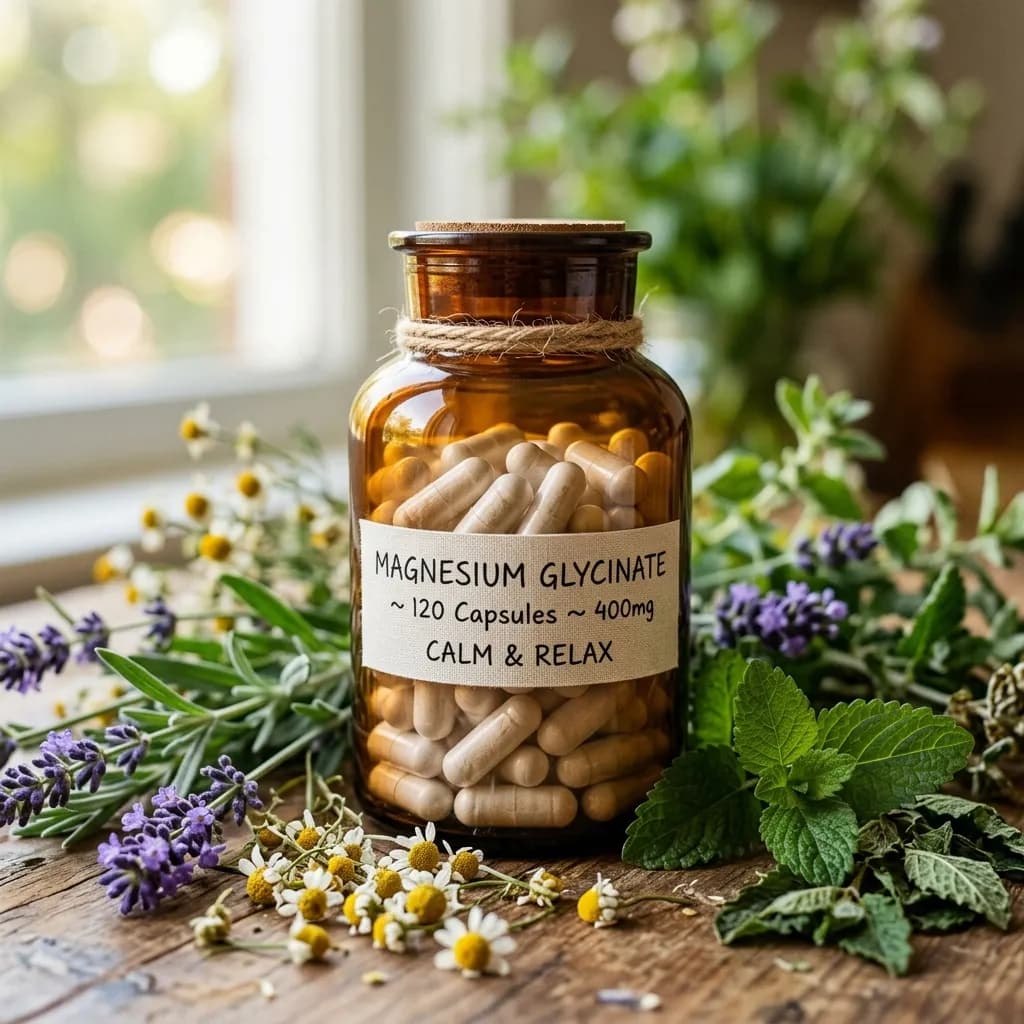

Chelated Magnesium Bisglycinate for Mitochondrial Enzyme Support: Targeted Bioavailable Chelation modality incorporating Magnesium Glycinate in connection with Fatigue.
"Magnesium bisglycinate is the ultimate relaxation mineral, essential for over three hundred enzymatic reactions, mitochondrial ATP synthesis, vascular smooth-muscle relaxation, and insulin receptor sensitivity."
Help rate the effectiveness of Magnesium Glycinate for Fatigue. Your feedback guides the community.
"Magnesium is involved in over three hundred enzymatic reactions, yet the majority of modern adults live in a state of subclinical intracellular deficiency."